Pokémon turned thirty in 2026, and the trading card game is bigger now than it was at any point in the original craze. It is the line that brings a nine-year-old into a card shop for the first time, and the line that same person comes back to at thirty-five with a shoebox they found in a parent’s closet. Every card shop in America carries it. What separates one from another is how honestly it’s priced, and whether the person behind the counter can tell you why a card is worth what it’s worth.
That’s the counter we’re building. Ten games, and Pokémon is the one we expect to see most.
What the Pokémon TCG actually is
Two players, sixty cards each, six prize cards set aside face down. You play Pokémon to your bench, attach energy, evolve them, and attack. Knock out an opponent’s Pokémon and you take a prize card. Take all six and you win. It’s simple enough to teach in ten minutes and deep enough that the same decks have been argued about for two decades.
Alongside the game is the collecting hobby, which in Pokémon’s case is nearly a separate economy. A card has a set, a number, a rarity, and — for anything that matters — a grade. The chase in modern sets is the Special Illustration Rare: full-art cards with painted scenes that sell for many times the price of the pack they came in. Older cards live on their own scale entirely, where a shadowless Base Set Charizard in a high grade is priced like a car.
How the community plays it
Pokémon’s competitive scene runs through Play! Pokémon, the official organized play program. At the bottom is weekly League play at local shops — bring a deck, play a few games, walk out with a promo. Above that sit League Challenges and League Cups, then Regional Championships that draw thousands, then the World Championships every August.
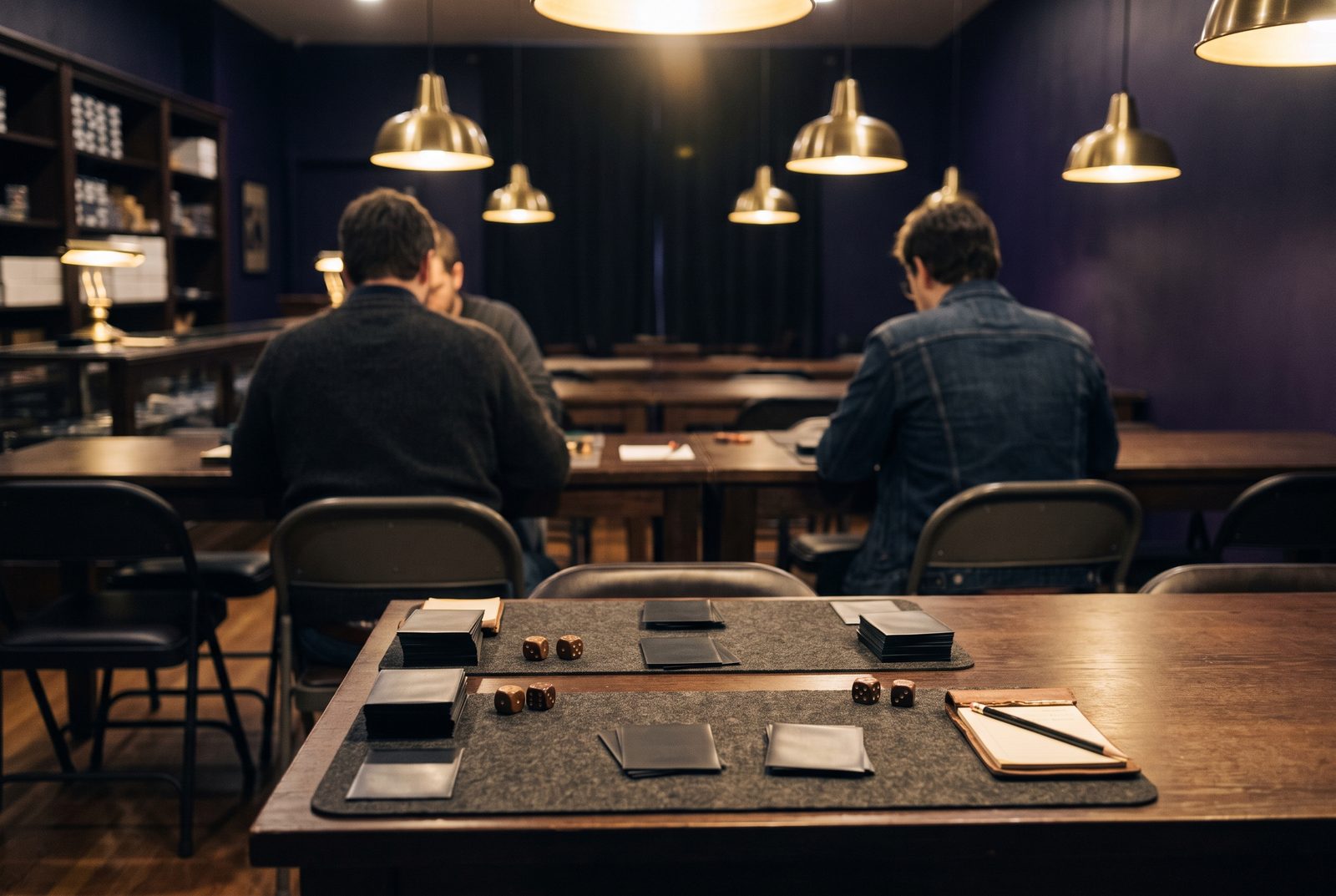
What makes Pokémon different from the other games we carry is the age spread. Junior, Senior and Masters divisions play in the same room. Parents learn the game to play with their kids and then keep playing after the kids move on. A good Pokémon community is one where a twelve-year-old and a forty-year-old can sit across from each other and neither one feels out of place. That is the standard we intend to hold the play tables to.
The state of play in 2026
The Mega Evolution block is the current era of the game. Pitch Black landed in July, the worldwide 30th Celebration set arrived September 16 — the first Pokémon release to launch everywhere on the same day — and Mega Evolution: Delta Reign follows on November 6. Standard rotates once a year and is played with only the newest regulation marks, so if you’re coming back after a few years away, most of what you own is Expanded-only now. It still has value; it just doesn’t go in a Regionals deck.
The 2026 World Championships wrapped in San Francisco at the end of August. The 2027 Championship Series is already under way: Baltimore Regionals run September 18–20, Louisville October 9–11, and Las Vegas December 4–6. None are in Florida this quarter, which is exactly why the local League matters.
What we stock, and what we buy
One honest number first: current-set Pokémon sealed loses roughly a percent a week after release, so we price it to move rather than to hold — and we’ll tell you the same when you’re selling it. Allocation is tight across the whole hobby; shops receive a fraction of what they request on a hot set, and when we’re short we’ll say so rather than quote a box we can’t get.
Sealed. Booster boxes and Elite Trainer Boxes from current sets, plus older sealed when it comes across the counter. We’ll tell you plainly when a set’s sealed is soft — ETBs and tins generally are.
Singles. A wall running from Base Set to whatever dropped last month, sorted by set and priced against live market data. Condition is graded on the card, not on the sleeve.
Graded. PSA slabs, priced by grade and population. If you’re deciding whether a raw card is worth grading, ask — we’ll give you an honest read on where it’s likely to land.
What we buy: all of the above, plus bulk by the thousand. Bring it to the counter, or send a photo first and we’ll tell you whether it’s worth the drive.
Where to play this season
Miami plays Pokémon on Thursdays — League night across the county — and the 30th Celebration launch on September 16 is the biggest week of the year. The nearest Regionals are on the events board. League at the shop starts with opening; join the opening list and pick Pokémon to hear the first date.