
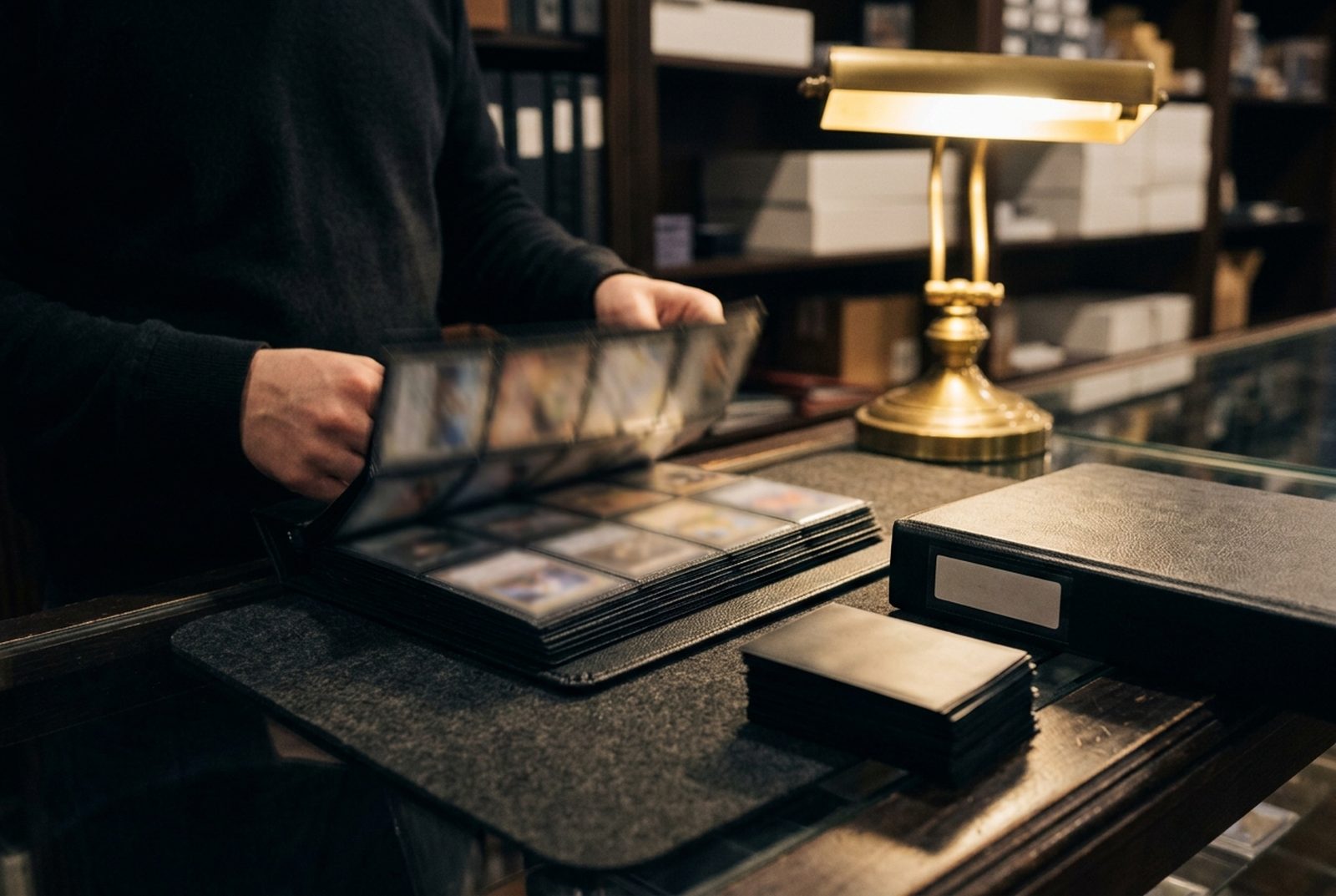
Every collection is two collections: the cards worth pricing one at a time, and everything else. The second one is bulk, and it’s where people’s expectations and the counter’s number diverge the most. Here’s how it actually works.
What bulk is
Bulk is any card that isn’t worth the time it takes to price it individually. In practice:
- Commons and uncommons from any set, including current ones.
- Rares and holos that trade for pennies — most of a modern set’s rare slot.
- Energy, basic lands, tokens when they come with the rest.
The test is simple: if the card sells for under about a dollar, it’s bulk. There are thousands of such cards in every set, and the market for them is measured in dollars per thousand, not cents per card.
Why a thousand cards is worth ten dollars
A shop that buys bulk has to do something with it. Realistically that means sorting it, selling playsets to players who need a fourth copy, filling dollar bins, or reselling it by the box to someone else. Each of those pays in fractions of a cent per card and costs labour. The going rates across the industry in 2026:
| Game | Cash per 1,000 | Credit per 1,000 | Notes |
|---|---|---|---|
| Magic commons & uncommons | $2–5 | $3–6.50 | Basic lands sometimes more |
| Magic bulk rares & mythics | 5–8¢ each | up to 10¢ | Foils a little more |
| Pokémon commons & uncommons | $8–10 | $10–13 | Reverse holos and holos by the hundred |
| Yu-Gi-Oh! commons & rares | $5 | $6.50 | Vintage 1st Edition is not bulk |
| Lorcana, One Piece | $10 | $13 | Newer games, smaller print runs |
Those are the national online buylists and the shops that publish numbers. GH Games’ rates sit at the top of each range and are printed on the Sell page.
What isn’t bulk
This is the part that matters, because it’s where the money is. A shop that counts your bulk properly is pulling cards out as it goes — anything that prices as a line goes on the sheet as a single, not into the thousand. What to expect pulled:
- Any holo or reverse holo of a popular Pokémon — Charizard, Pikachu, Umbreon, Gengar — even from a weak set.
- Rares over about a dollar, which in Magic means most Commander staples and every fetch land, shock land and tutor.
- Alternate arts, full arts, secret rares, textured cards. If it feels different, it isn’t bulk.
- Promos, prerelease stamps, event cards. Small print runs.
- Vintage. A common from Base Set Pokémon or Alpha Magic is not a common.
- Foils in Magic and Lorcana, which trade above their non-foil versions.
At GH Games, bulk is counted on the counter in front of you precisely so you can see what gets pulled. If we pull a card, you’ll see it land on the sheet.
How to sort so you’re paid faster
You don’t have to sort. Unsorted bulk is fine; it just takes longer and gets priced after sorting instead of while you wait. If you do have twenty minutes:
- By game. Pokémon in one box, Magic in another. Mixed boxes are counted last.
- Faced the same way. All cards upright, all facing forward. This alone halves the counting time.
- Unsleeved. Bulk in sleeves has to be unsleeved to count; keep the sleeves for your good cards.
- English separate from other languages. Non-English bulk is worth about half the rate on most games.
- Pull anything shiny into a separate stack. That’s the “not bulk” pile, and it’s where your money is.
What not to do
Don’t clean cards; it damages them. Don’t rubber-band stacks; it bends them. Don’t take holos out of sleeves to “check”; every handling is a chance for a scratch that drops a tier. And don’t spend a weekend pricing bulk card by card on a marketplace — the fees and shipping on a fifty-cent card eat the fifty cents.
The one honest thing about bulk
It doesn’t appreciate. Sealed product does; singles can; a box of commons is a box of commons forever. The right time to sell bulk is whenever it’s in your way, and the right way is by the thousand, to a counter that pulls the good cards out first.